 |
Leh Ladakh With Gallery |
 |
|
|
Leh Ladakh With Gallery |
|
|
|
|
|
|
|
 |
Leh Ladakh With Gallery |
||
KAILASH MANSAROVAR
PARIKRAMA
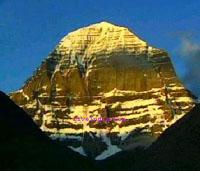
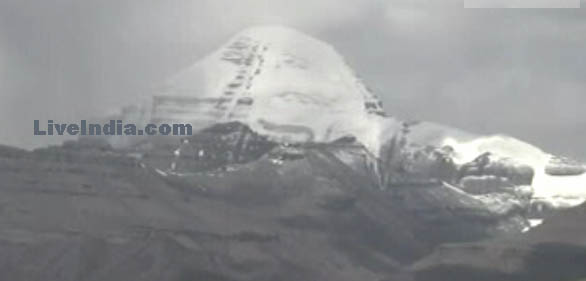
The parikrama around Mt. Kailash starts and finishes at Tarchen. From Tarchen, the pilgrim circuit enters the Lha Chhu (God's River) valley, a spectacular canyon below the mountain’s western flanks. In the northern face, the trail climbs to the Dolma Pass (18,600 ft.), and then descends quickly into the Lham Chhu Khyer valley before returning to Tarchen. It is 52-km circuit around Mt. Kailash. The Mansarovar parikrama covers Huore, Chugu and Zaidi, a distance of around 75 km. VICINITY
Shortly after the Dolma Pass is a large lake called Gouri Kund. A dip in the holy waters of Gouri Kund is believed to vanquish all languor. Rakshash Tal is just 10 km from Mansarovar. It is at a height of 14,900 ft and is 150 ft deep. The two lakes, Mansarovar and Rakshash Tal, are the highest freshwater bodies in the world connected by a channel called Ganga Chu. INFORMATION This pilgrimage is conducted by Uttar Pradesh State Government and Kumaon Mandal Vikas Nigam (KMVN) in association with the Ministry of External affairs. KMVN makes all the arrangements up to the Lipu Lekh Pass, which includes accommodation in tin sheds at all the night halts, electricity through generators, simple vegetarian food, etc. The cost of all these facilities is included in the package by KMVN. All kinds of medical and security facilities are also provided. The U.P. Police, the Prantiya Suraksha Dal and the Indo-Tibetan Border Police provide the required service to the pilgrims. Ponies and porters are also arranged for the convenience of the travelers. After Lipu Lekh Pass, Chinese authorities take over and provide the necessary facilities. The Chinese authorities do not arrange for food during the parikrama. Hence, the yatris should carry their own provisions in Tibet. In order to undertake the journey from India, one has to go through the Ministry of External Affairs and submit application. Only around 200 pilgrims are selected every year from among thousands who apply. The most important requirement for the journey is the medical fitness certificate test. The test has to be cleared to undertake the arduous trip in which trekking of almost 20,000 feet is involved. For this purpose, a clinical checkup of the traveler's physical condition is made for two days. After that, one has to undergo the visa and foreign exchange formalities. Pilgrims are allowed to take US $500 for the yatra of which $400 has to be given to the Chinese authorities to cover expenses of accommodation, transportation, coolies, etc. The duration of the entire trip is 32 days from Delhi of which only the first and last two days are spent in bus. The entire trip is under the guidance of the Ministry of External Affairs and Kumaon Vikas Mandal Nigam (a unit of U.P. Tourism, responsible for the pilgrimage on the Indian side). HOW TO REACH
The route from New Delhi consists of both bus journey and high altitude mountain trekking. The bus route covers the following track: Delhi - Gajraula - Kathgodam - Nainital - Bhowali - Almora - Kausani - Bageshwar - Chowakari – Didihat - Dharchula via Jauljibi - Tawaghat. The trekking route which takes the pilgrims through some beautiful terrains and passes, covers the following: Tawaghat - Thanidar - Pangu - Sosa - Narayan Ashram - Sirkha - Rungling Top - Simkhola - Gala - Jipti - Malpa - Gudhi - Guji - Garbhyang - Kalapani - Avidhag - Lipu Lekh Pass - Pala - Taklakot. The first halt is at Kasauni near Nainital,
which is famous for its sunrise beauty, and the next at Dharchula
|
||
| India advises caution
to Kailash Mansarovar pilgrims
NEW DELHI - India Thursday advised intending Kailash Mansarovar pilgrims to take caution and “prepare for the difficulties that they may have to face” on the high altitude journey “where availability of medical facilities, accommodation, food items, means of communication and transport are minimal”. This year while large number of Indians are showing interest in visiting Kailash Mansarovar, situated at an altitude of 13,000 feet in Tibet, at least 10 tourists, who had gone with private tour operators, died, and many more had to cut short their trip due to medical emergencies. Worried over the rising incidents of deaths, the ministry of external affairs (MEA) issued a travel advisory for the pilgrims going with private operators. “Most of the tourists are unaware of the actual conditions in Kailash-Mansarovar area and need to prepare for the difficulties that they may have to face,” said the MEA’s travel advisory. “Tourists may get affected by high altitude sickness and other medical problems, which can be fatal in the absence of adequate medical facilities,” the advisory said. The ministry asked the pilgrims to get properly acclimatised and spend at least three nights at 9,000 feet, and two nights each at 12,000 and 15,000 feet. “Tourists may ensure that the tour schedule drawn up by their private tour operators have sufficient time for acclimatisation,” said the advisory. Besides, they were also advised to take 19 medical steps to determine if they were healthy enough to take the arduous journey. The ministry itself operates a subsidised tour for pilgrims, but seats are restricted and allotted by a draw. Consequently, a large number of people go on expensive and poorly-equipped trips organised by private operators, often without any preparation for the rigorous journey. |
||
 |
||
 |
|
|
|
|
|
|

Welcome to Swami Rajesh Chopra's |
 |
 |
 |
 |
 |
 |
 |
|
LiveIndia.Com Copyright © 1998-2001 Live
India Internet Services! All rights reserved
|
